Osage Allotment Act of 1906
Killers of the Flower MoonThe Osage Allotment Act of 1906 was a negotiated settlement that divided the Osage Reservation into individual surface holdings while reserving its minerals to the Osage Tribe. It was both a defense against another land rush and a consequential compromise: Osage leaders preserved collective control of the oil and other minerals, even as allotment advanced the federal project of replacing communal landholding with private property and opened the way for outsiders to acquire surface land. The agreement created the basis of the mineral headright system that would shape Osage wealth and its administration for generations.
Land Loss and the Allotment Campaign
The agreement followed a long sequence of dispossession. Within four years of Thomas Jefferson’s 1804 meeting with Osage chiefs, the United States had compelled the Osage to relinquish territory between the Arkansas and Missouri Rivers. Over the following two decades, they ceded nearly a hundred million acres and ultimately sought refuge in a 50-by-125-mile tract in southeastern Kansas. In 1870, after being driven from their lodges and amid attacks on Osage people, they agreed to sell their Kansas lands to settlers for $1.25 an acre. The move to allotment therefore arrived not as an isolated administrative reform but after repeated losses of land and home.
The Osage later searched for a new homeland and debated purchasing nearly 1.5 million acres from the Cherokee in Indian Territory. Their purchase of land made it harder for the federal government to impose allotment than it had been elsewhere, but it did not remove the pressure. By the late nineteenth century, federal policy aimed to parcel reservations into individual holdings, generally of 160 acres, and open the remainder to settlers. The policy was meant to end communal landholding and recast Native people as private-property owners, a transformation that could also facilitate the acquisition of their land. The Osage had seen the consequences of a land rush in the Cherokee Outlet, where land was divided among claimants in a violent race. Their leaders sought terms that would avoid a similar scramble on Osage territory.
Negotiating the Agreement
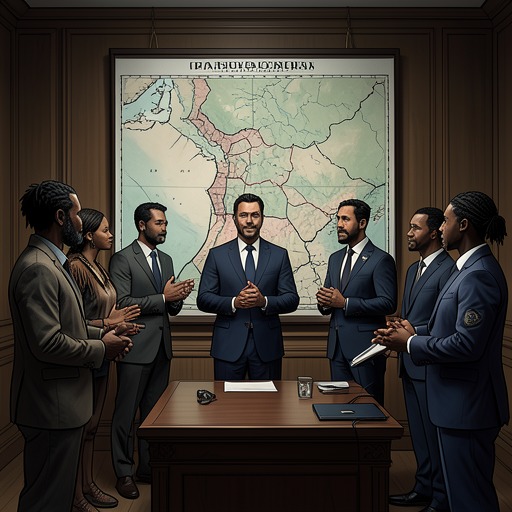
James Bigheart led the Osage effort to delay allotment. The Osage were the last tribe in Indian Territory to undergo the process, and the delay gave them leverage as federal officials sought to clear obstacles to the creation of Oklahoma. In 1904, Bigheart sent John Palmer, a young lawyer adopted into an Osage family, to Washington to follow developments and represent the tribe’s interests. Bigheart, Palmer, and other Osage negotiators then spent months bargaining with government officials over the terms.
The resulting agreement divided land solely among members of the tribe. Instead of the standard 160-acre parcel, each Osage allotment increased to 657 acres. By keeping the land from being opened immediately to a mass claim by settlers, the arrangement avoided a land run; it did not prevent white buyers from later seeking to purchase the allotted surface property. The distinction between surface land and minerals was central. The agreement reserved the oil, gas, coal, and other minerals beneath the land to the Osage Tribe, retaining a form of collective ownership that individual surface allotments did not erase.
The mineral reservation was not merely a speculative provision. More than a decade earlier, an Osage man had shown John Florer, the owner of a trading post in Gray Horse, an oily rainbow sheen on a creek. Florer recognized the substance as oil, and, with tribal approval, he and a banking partner obtained a drilling lease. By the time allotment was negotiated, several small wells were operating. The Osage thus preserved a resource they knew existed, even though the scale of the fortune beneath their land was not yet apparent. After the terms were agreed, Palmer told Congress that he had written the Osage agreement out by hand, underscoring the negotiators’ direct role in shaping its language.
Headrights and the Underground Reservation
When the agreement was implemented in 1906, Mollie and her family, like other people on the Osage tribal roll, received headrights: shares in the tribe’s mineral trust. Oklahoma entered the Union the following year, after which Osage members could sell their surface land in what was now Osage County. The mineral headrights followed a different rule. They could not be bought or sold; they could pass only by inheritance. Surface property might leave Osage hands, while the underlying mineral interest remained governed through the tribal trust and its hereditary shares. The book describes this arrangement as the first underground reservation: a reservation beneath land that could be transferred above it.
The provision gave the Osage a durable stake in mineral revenues, and the tribe subsequently leased more areas to white prospectors. Drilling transformed the landscape as workers sank wells; some prospectors instead struck dry holes and departed. The agreement’s importance lies in the legal boundary it established between transferable surface holdings and minerals retained for the tribe. It did not halt outside entry or restore the lands previously lost, but it preserved a source of collective wealth that could not simply be purchased along with an allotment.
Protection and Its Limits
The mineral reservation did not place Osage members beyond federal control of their finances. The book also describes a guardianship system in which officials deemed many Osage unable to manage their own money, with decisions frequently tied to a person’s degree of Indigenous ancestry. Lizzie and Anna, for example, were classified as incompetent and had a white guardian overseeing their spending. In 1921, Congress imposed further restrictions: Osage people under guardianship could withdraw only limited amounts from their trust funds, even when they needed money for education or medical care. These later controls should not be confused with the 1906 agreement’s mineral reservation, but they show the unequal conditions under which the preserved wealth was administered.
The agreement’s achievement was therefore specific, not absolute. Bigheart, Palmer, and the other negotiators secured a larger allotment for each member and kept mineral rights from becoming ordinary saleable property. That arrangement helped preserve tribal control of the subsurface even as allotment fragmented the surface and federal authorities continued to regulate Osage finances. The Act was a strategic response to land seizure, one that protected a collective resource within a policy designed to break up collective landholding.